
Skip to content
TruFrame

Engineering

How the system works.

Nine things decide how a uPVC window performs in Indian conditions. Here is what each one does and who is responsible for it. These are explanations of how the parts work, not test results.

Parts and responsibility

  1. Profile · The extruded uPVC section. Its compound decides how it ages in sun.TruFrame
  2. Chambers · Hollow cells inside the profile. Still air in them slows heat moving through.TruFrame
  3. Gasket · The TPE seal between sash and frame. Noise and dust come in through gaps.TruFrame
  4. Reinforcement · Steel inside the profile that keeps long frames stiff. Sized to the opening.Fabricator
  5. Drainage · Slots that let water back out when it gets past the outer seal.Fabricator
  6. Hardware · Handles, hinges, rollers and locks. They decide how the window operates.Fabricator
  7. Glazing · The glass unit and how it is bedded into the sash.Fabricator
  8. Installation · Fixing and sealing the frame to the wall. Many leaks start here.Installer
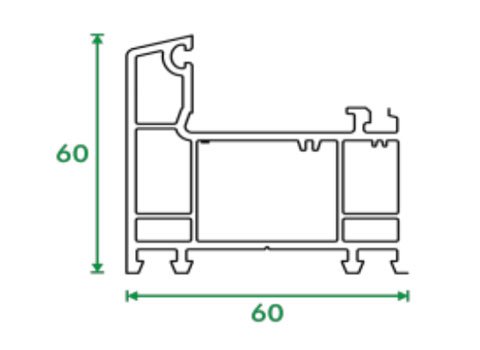
Section drawing of profile TF 201, Casement 60 system, with overall dimensions in millimetres
TF 201Casement 60 · section drawing

TF 201, a published Casement 60 section. The hollow cells inside the outline are the chambers.

01 / MATERIAL

The compound decides how a profile ages.

TruFrame

uPVC is unplasticised polyvinyl chloride. It is rigid, does not rot or rust, and conducts heat poorly. A raw PVC resin still needs stabilisers, impact modifiers and pigment before it can be extruded into a window profile. That recipe is the compound.

Older compounds used lead-based stabilisers. TruFrame's compound is formulated lead-free.

Formulation
Lead-free
Status
Stated · declaration not yet published

02 / UV

Titanium dioxide is what keeps white frames white.

TruFrame

Ultraviolet light breaks down PVC at the surface. On a poorly pigmented profile this shows up as yellowing and a chalky finish within a few years, faster on south- and west-facing walls.

Titanium dioxide (TiO₂) is a white pigment that screens UV. How much is in the compound is given in parts per hundred resin (phr). It is one of the most useful questions to ask any profile supplier.

TiO₂ loading
8 phr
Status
Stated · specification not yet published

03 / CHAMBERS

Air is the insulator.

TruFrame

A profile is not solid. Internal walls divide it into chambers. Each chamber holds still air, and still air conducts heat poorly, so heat has to cross several layers to get through the frame. The walls also stiffen the section and create separate cavities for reinforcement and drainage.

More chambers usually means a slower heat path, but chamber count alone does not give a thermal value. That needs a test on the finished window.

Peafowl
5 chambers · 60 mm
Falcon
4 chambers · 60 mm
Casement 60
5 chambers · 60 mm
Casement 50
3 chambers · 50 mm

04 / SEALING

The seal does the work, not the plastic.

TruFrame supplies · Fabricator fits

Noise and dust come in through gaps before they come through glass. The gasket between sash and frame closes those gaps. TruFrame systems use TPE (thermoplastic elastomer) gaskets.

What matters is continuity. A gasket that is broken or badly joined at a corner leaves a path for air, and with it sound and dust. Casements press the sash onto the gasket when they close. Sliders seal along the moving panel edges, which is usually less tight.

Gasket
TPE

05 / DRAINAGE

Drained, not just sealed.

Fabricator

In a monsoon storm with wind behind it, some water will get past the outer line of any window. A good system expects this. Water collects in an outer chamber and drains back outside through slots in the frame.

The profile provides the chambers. The slots are machined during fabrication. They need to be in the right place and kept clear, or water sits in the frame and eventually reaches the wall.

06 / REINFORCEMENT

Steel inside keeps long frames straight.

Fabricator

uPVC is less stiff than aluminium or steel. For larger openings, and to hold hardware fixings firmly, a steel section is inserted into a dedicated chamber of the profile.

When reinforcement is needed depends on the opening size, the system, wind exposure and the hardware. The system specification sheet refers reinforcement to approved project-specific documentation, so confirm it with the technical team for each job.

07 / HARDWARE

The profile holds it. The hardware decides how the window works.

Fabricator

Handles, hinges, friction stays, rollers and locking points set how a window opens, how firmly it closes onto the gasket and how secure it is. Hardware has to be compatible with the profile's hardware groove and sized to the sash weight.

Hardware is chosen and fitted by the fabricator and usually carries its own warranty, separate from the profile warranty.

08 / FABRICATION

A good profile can still become a bad window.

Fabricator

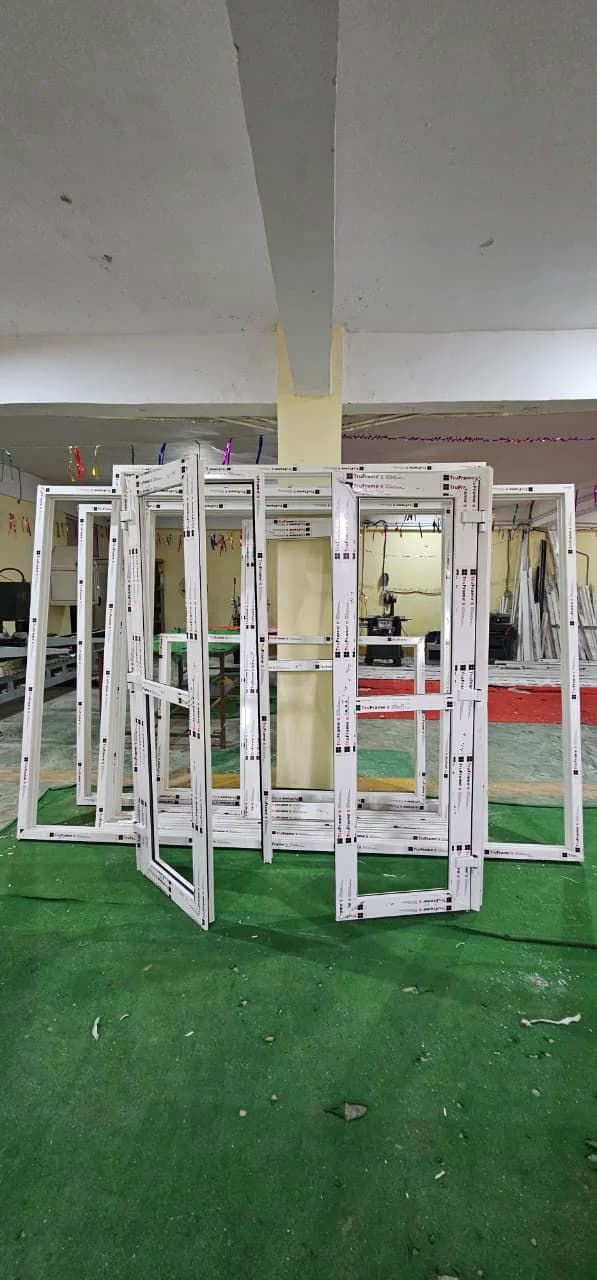
Fabrication means cutting, reinforcing, welding corners, cleaning the welds, machining drainage and fitting gaskets, hardware and glass. Each step affects the finished window. A weak weld, a missing drainage slot or a sash out of square will undo what the profile was designed to do.

This is why TruFrame's partner programme includes a machine compatibility check and fabrication training.

A group of welded uPVC casement frames and sashes standing upright on a workshop floor
Fabricated casement frames and sashes
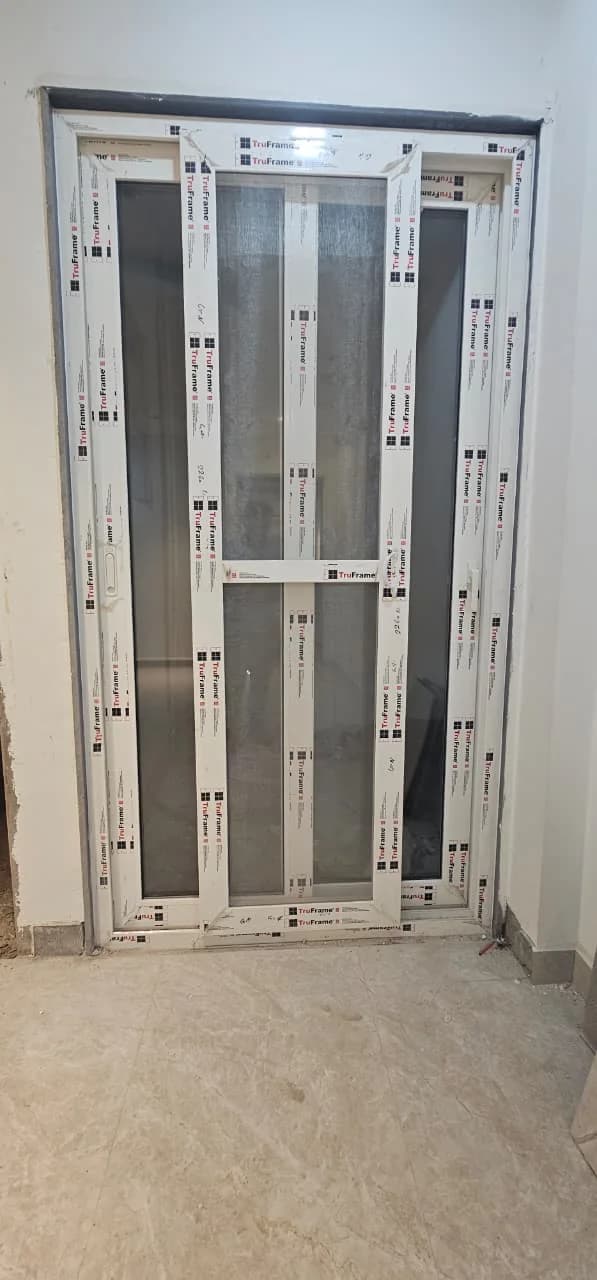
A white uPVC door frame fitted into a wall opening, protective film still on the profile
Door frame fitted, film still on
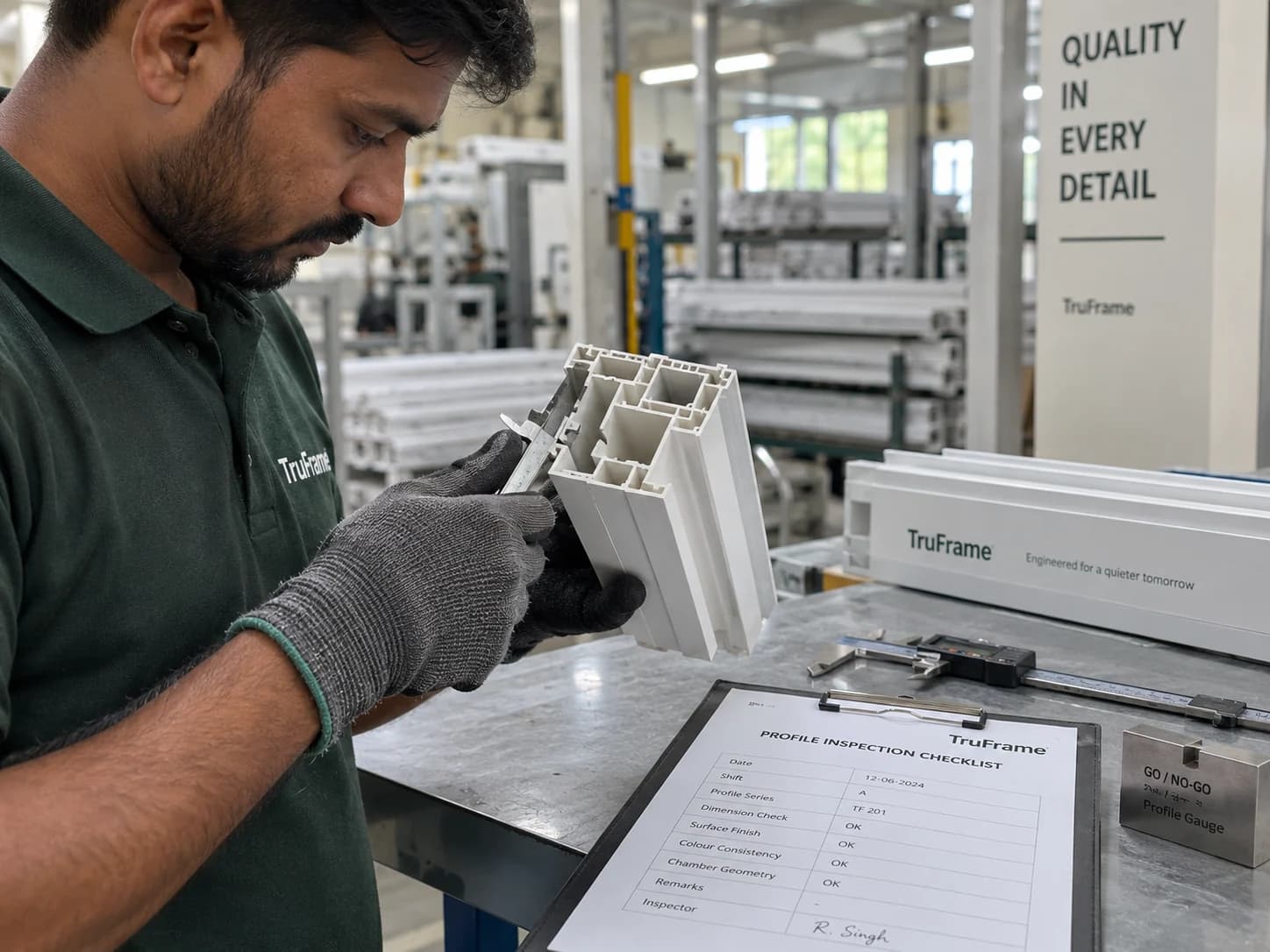
Technician inspecting a TruFrame uPVC profile.
Checking a profile section with a caliper

09 / INSTALLATION

The finished window is a system, not just a profile.

Installer

Even a well-built window will leak at the wall if it is fixed out of plumb, packed badly or sealed with the wrong material. The gap between frame and masonry needs a proper fixing, packing and a weather seal.

Ask who installs the window, and who is responsible if the joint between window and wall leaks. It is often a different party from the one who made the profile.

Where windows fail

Six ways a window lets you down.

Most complaints about windows come down to a handful of causes. Here is each one, and what the TruFrame system does about it.

Noise

Gaps around the sash.

Sound gets in through air gaps first and glass second. A sash that does not close evenly onto its seal lets traffic noise straight through, whatever glass is fitted.

TruFrame response

A TPE gasket runs between sash and frame. Casement systems press the sash onto it when closed, which is why they are usually the first choice when noise matters most.

Read the detail

Heat

Poor thermal separation.

A frame that conducts heat well lets it bypass the glass. Aluminium without a thermal break is the common example.

TruFrame response

uPVC conducts heat poorly, and the multi-chamber section holds still air. The range runs from three chambers (Casement 50) to five (Peafowl, Casement 60).

Read the detail

Dust

Incomplete sealing.

Dust follows air. Any break in the seal, at a corner, a joint or a worn brush, is where it gets in.

TruFrame response

The same gasket that deals with noise keeps dust out. It needs to be fitted without breaks at the corners.

Read the detail

Water

Badly managed drainage.

In driving rain, some water gets past any outer seal. If the frame cannot drain it, water collects and finds the wall.

TruFrame response

Chambered sections leave room for drainage. Where the drainage slots go and how they are cut is decided during fabrication.

Read the detail

UV

Weak profile formulation.

Strong sun breaks down a poorly pigmented compound. The frame yellows and turns chalky within a few years.

TruFrame response

The TruFrame compound is stated at 8 phr titanium dioxide, the UV-screening pigment, and is formulated lead-free.

Read the detail

Operation

Poor fabrication or hardware setup.

A good profile badly welded, reinforced or adjusted will stick, drop or leak. Most complaints about finished windows start here.

TruFrame response

TruFrame supplies the profile and drawings. Fabricators turn it into the finished window, so partner training covers reinforcement, drainage and gasket fitting.

Read the detail

Indian conditions

Built for the conditions windows actually face.

India does not have one climate. Each region stresses a window in a different way, and each stress points to a different part of the system. These are mechanisms, not test results.

  • Rajasthan

    High summer heat and strong UV

    Sun degrades a weak compound first. Pigment loading decides whether a white frame stays white.

    8 phr titanium dioxide

  • Delhi NCR

    Dust and visible air pollution

    Dust comes in with air, through gaps at the sash. The seal matters more than the glass.

    TPE gasket

  • Coastal India

    Salt air

    Salt attacks exposed metal. uPVC itself does not corrode, but steel reinforcement and hardware still need the right specification.

    Lead-free uPVC compound

  • Monsoon, nationwide

    Driving rain

    Water gets past the outer line of any window in a storm. What matters is whether the frame drains it out.

    Multi-chamber, drained sections

From profile to window

Who does what.

Manufacturing and fabrication steps with responsible party
StepStageResponsibleWhat happens
01CompoundTruFrameLead-free formulation with 8 phr titanium dioxide.
02ExtrusionTruFrameProfiles are extruded at the works in Alwar, Rajasthan.
03DispatchTruFrameLengths leave in TruFrame-printed protective film.
04CuttingFabricatorProfiles are cut to the opening schedule.
05ReinforcementFabricatorSteel is inserted where the opening size calls for it.
06WeldingFabricatorCorners are fusion-welded and cleaned.
07HardwareFabricatorHandles, hinges, rollers and locks are fitted.
08GlazingFabricatorThe glass unit is bedded and beaded into the sash.
09InstallationInstallerThe frame is fixed, packed and sealed to the wall.

Talk to TruFrame

Tell us about the opening.

Size, floor, which way it faces and what you want to keep out. That is usually enough for our technical team to point you to the right system.

WhatsApp